Research
New here?How to read this page
▶
How to read this page
Team tables split by side of the ball, and the Side control hides the half you are not reading. What a team allowed is what its opponents gained, so the allowed tables are the offensive ones read from the other end. The roster is everyone who recorded a stat line, because the source holds no roster of its own — a player who never got on the field is absent. A dash means no number for that cell, or a zero in a roster column that counts.
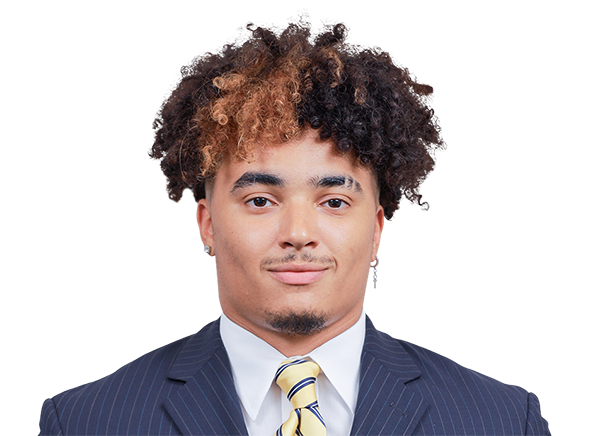
Damon Ollison II
 LB2026 · Regular Season
94th beats 94% of the NCAAF LBs; 1 is the best of however many the row says. Higher is always better, whichever way the stat runs. Red to green by where the placing sits. A stat with no better end is left unpainted.
Playing Timevs NCAAF LBs▶
DefenseDefensevs NCAAF LBs▶
Game log2 games
| Date | Opp | TOT | SOLO | SACK | TFL | PBU | INT | DEF TD |
|---|---|---|---|---|---|---|---|---|
| Sep 19, 2026 |  TEM TEM | 1 | 1 | 0 | 0 | 0 | 0 | 0 |
| Sep 12, 2026 |  CCSU CCSU | 3 | 3 | 0 | 1 | 0 | 0 | 0 |
| Season | GP | TOT | SOLO | SACK | TFL | PBU | INT | DEF TD |
|---|---|---|---|---|---|---|---|---|
| 2026 | 2 | 4 | 4 | 0 | 1 | 0 | 0 | 0 |
| 2024 | 7 | 12 | 4 | 0 | 0.5 | 0 | 0 | 0 |
| 2023 | 3 | 4 | 1 | 0 | 0 | 0 | 0 | 0 |
About College Football Research
▶
Every number the site holds for a college football team and the players who played for it, in one place. Pick a team, a season and a set of games, and read it. Nothing here needs an account.
Where the numbers come from
The same tables the boards read, resolved through one shared definition per stat. A rate is computed over the whole window rather than averaged across games, so a season figure is not the mean of the nightly ones.